How To Know If Your Child Needs Orthodontics
There isn’t one specific age when every child should begin orthodontic treatment. In fact, many children who have an orthodontic evaluation at age 7 won’t need treatment right away.
Around age 7, however, children typically have a mix of baby teeth and permanent teeth. This gives an orthodontist a valuable opportunity to see not only how the permanent teeth are coming in, but also how the jaws are growing and how the bite is developing.
Why evaluate a child while they still have baby teeth?
It may seem early to think about orthodontics when your child still has plenty of baby teeth, but this stage of development can tell us a lot.
Baby teeth help hold space and guide permanent teeth into position. At the same time, your child’s jaws are still growing. By evaluating the relationship between the teeth, jaws and facial growth early, an orthodontist can identify developing problems before all of the permanent teeth have erupted.
When treatment is recommended at this age, the goal usually isn’t to create a perfectly straight smile right away. Instead, early orthodontic treatment can help lay the groundwork for a healthier bite as your child grows.
Depending on your child’s needs, early treatment may help:
- Guide permanent teeth into more favorable positions
- Create room for permanent teeth that have not yet erupted
- Reduce significant crowding
- Guide jaw growth and improve how the upper and lower jaws fit together
- Correct certain bite problems while the jaws are still developing
- Address the effects of habits such as prolonged thumb or finger sucking
- Reduce the risk of some teeth becoming impacted
- Make later orthodontic treatment simpler or more predictable
Not every child needs early treatment. Sometimes the best recommendation is simply to monitor growth and development until more permanent teeth come in. An early evaluation gives your orthodontist the opportunity to determine which approach makes the most sense.
Are there signs I should look for?
Yes. While some orthodontic problems are difficult to spot without an examination, there are a few signs parents can watch for:
- Early or late loss of baby teeth
- Difficulty chewing or biting into food
- Grinding or clenching of the teeth
- Mouth breathing
- Speech difficulties
- Ongoing thumb or finger sucking
- Crowding, misplaced or blocked-out teeth
- Jaws that shift when your child bites
- Jaw popping or other unusual jaw sounds
- Teeth that noticeably protrude
- Frequent biting of the inside of the cheek
- Upper and lower teeth that meet abnormally or do not meet at all
- Jaws or teeth that appear out of proportion with the rest of the face
Following are some visual examples of what that can look like:
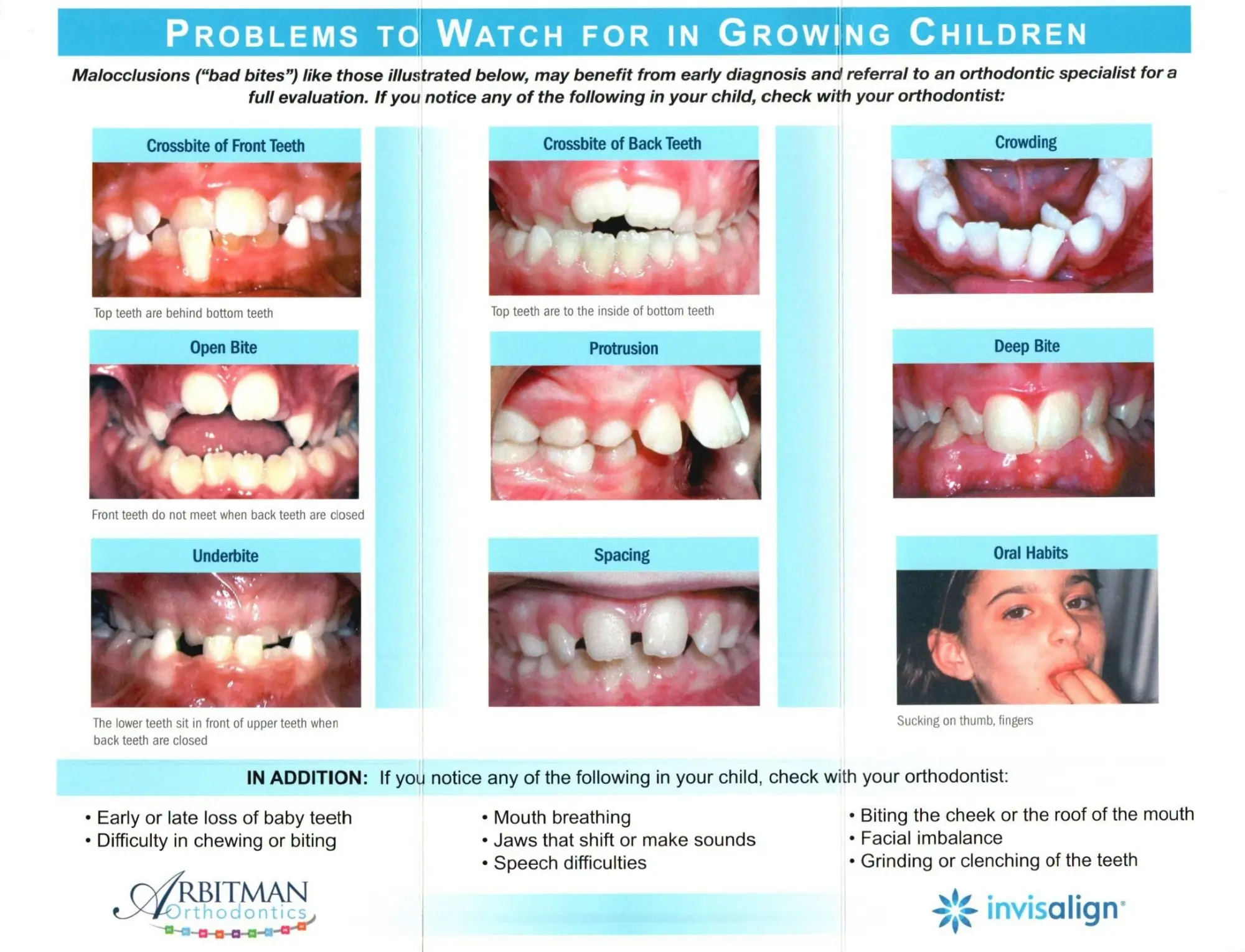
Keep in mind that seeing one or more of these signs does not necessarily mean your child needs orthodontic treatment. It may simply mean that an orthodontic evaluation is worthwhile.
What happens after an early evaluation?
For many children, the answer is simply: we watch and wait.
Dr. Boris Arbitman can monitor how your child’s permanent teeth are erupting, how the jaws are developing and how the bite is changing over time. If treatment becomes beneficial, it can then be recommended at the stage when it may have the greatest impact.
But if the signs we mentioned above look familiar, have no fear, your child will be in good hands. When a child will benefit from early treatment, the focus is on creating the best possible foundation for future growth, function and a healthy smile.
Providing personalized orthodontic care for children and families throughout Queens and Long Island, Dr. Arbitman uses modern orthodontic technology and treatment planning tailored to each patient’s individual needs.
Wondering whether it’s time for your child’s first orthodontic evaluation? Call (718) 848-6900 or click here to schedule a free consultation.